
To Kill a Mockingbird

“Contrariwise,” continued Tweedledee,” if it were so, it might be, and if it were so, it would be; but as it isn’t, it ain’t. That’s logic!”
Lewis Carroll, Through the Looking Glass
Words mean things. That may be a concept not readily accepted by some, but it is true nonetheless.
During my final year of full time teaching, I was sitting in a meeting for the entire high school staff facilitated by the district’s Director of Equity and Inclusion. This was a new position created by the school district. I was not entirely sure what that job would entail, but equity and inclusion seemed like good goals - also, this new administrator was making two times a teacher’s salary, so he must be good. We had come to the point of the meeting where the Director of Equity and Inclusion was stating what he believed and had invited questions and comments from the teachers. Believing that the school administrator actually wanted our input was my first mistake. What I said was my second mistake.
After stating his beliefs the Director of Equity and Inclusion said, “Now that is my truth. You have your truth, and other people have their truths. There is no absolute truth.”
I asked, “Is that not a logical fallacy?”
“What exactly do you mean,” he asked, frowning at me.
“If you say ‘there is no absolute truth’ or ‘all truth is relative,’ that is a logical fallacy - it is self-defeating. By stating there is no absolute truth - and you are stating it as an absolute truth - you have just contradicted yourself.”
That is example 47A from the handbook “When You Know It’s Time to Retire.”
This is not just some rhetorical dilemma or exercise in logic. The idea that “we all have our own truth” confuses personal subjective experiences with objective reality, effectively replacing facts with feelings. Trying to make absolute truth relative promotes incoherence and makes resolving conflict extremely difficult, if not impossible.
People have different perspectives, experiences and feelings, but that doesn’t mean reality itself changes for everyone. My interpretation of an event is not a new “truth,” it is just my perception. Phrases like “my truth” are often used to mean “my feelings” or “my opinion.” Elevating opinions to “truths” makes it difficult to challenge false, irrational or dangerous beliefs. Assuming your perception is “truth” encourages self-centeredness and prevents individuals from seeking the actual, objective truth outside their own limited understanding. If everyone has their own truth, conversations, laws and facts become meaningless. Society cannot function without a shared reality.
Essentially, this perspective misinterprets what truth is. Truth is what is real and corresponds to facts. If one person claims “the earth is flat” and another says “the earth is round,” both cannot be true simultaneously. The idea that both are valid “truths” renders the word “truth” meaningless.You are entitled to your own opinion, but you are not entitled to your own facts.
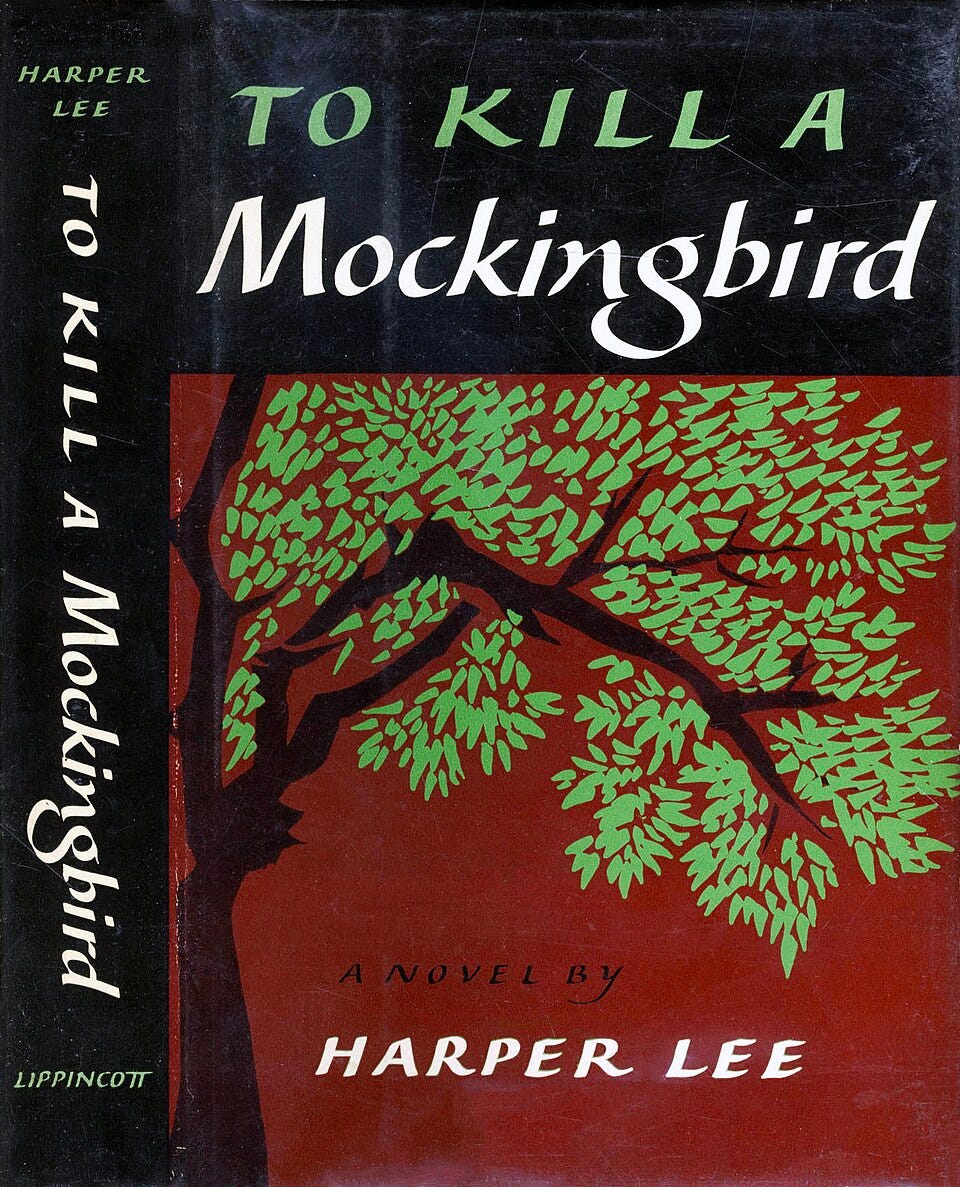
Despite this tendency being so ingrained within, literature can help us examine the issue and suggest a better way. To Kill a Mockingbird is Harper Lee’s Pulitzer Prize-winning 1960 novel about racial injustice and the loss of innocence in the Deep South, told through the eyes of young Scout Finch as her lawyer father, Atticus Finch, defends a Black man falsely accused of raping a white woman. Set in the fictional town of Maycomb, Alabama, during the Great Depression, the story explores themes of prejudice, empathy, and courage, becoming a classic of American literature widely read in schools.
The three main themes of To Kill a Mockingbird are the coexistence of good and evil, the prevalence of racial and social prejudice, and the loss of innocence/moral education. Harper Lee explores these through the children’s maturation in a deeply segregated, hypocritical Southern town. The novel heavily explores the injustice of the Jim Crow South, particularly through the wrongful accusation and trial of Tom Robinson, which highlights the town’s irrational hatred and deep-seated racism. This racist belief is so deeply ingrained that it is seen as a “truth.” Atticus Finch defends Tom Robinson against a false rape accusation, despite community backlash. Atticus teaches his children that people are not purely good or evil. The characters learn to navigate complex morality, seeing both the harsh, hateful side of Maycomb and the quiet, courageous goodness in individuals like Miss Dubose or the innocence of Boo Radley. The “mockingbird” symbol represents innocent people who are destroyed by evil, such as Tom Robinson and Boo Radley. The narrative focuses on Scout and Jem losing their childhood innocence as they learn to understand empathy, injustice, and the necessity of moral courage.
It is not morally courageous to adopt a position of “this is my truth, you have your truth, and other people have their truths, there is no absolute truth.” That attitude makes it virtually impossible to challenge irrational and dangerous beliefs like racism and segregation. Instead, Atticus Finch teaches us empathy (”Walking in someone’s shoes”) to help us understand other perspectives, and courage defined not as a man with a gun, but as fighting for what is right despite knowing you are “licked” before you begin.
The fact that we are hardwired to respond with emotions explains our tendency to fallacious thinking. It also explains our innate predisposition to believe advertising, propaganda, and conspiracy theories. Neurologists and psychologists have explained how the human brain functions and why social behavior that appears baffling, including blind belief, is consistent with our genetic makeup. But there is a better way, and Atticus Finch shows us the course to follow.
“If you cannot prove a man wrong, don’t panic.
You can always call him names”
-Oscar Wilde
Pursuit of Knowledge is a reader-supported publication. If you’ve found this essay useful and thought-provoking, please consider a one-time donation or becoming a paid subscriber. Your support means a great deal and makes it possible for me to dedicate more time to in-depth essays on philosophy, sociology, literature, leadership, and history.
"It is not morally courageous to adopt a position of “this is my truth, you have your truth, and other people have their truths, there is no absolute truth.” That attitude makes it virtually impossible to challenge irrational and dangerous beliefs like racism and segregation."
I didn't know how to put this sentiment into words, but you did it. 'You have your truths, I have my truths.' comes in other forms as well. "You don't like whatever I do because you hate me," instead of asking or figuring out what's wrong with what he was going to do. Or "You make me do this," instead of asking what gives him such a blanket permission. Thank you for another deeply insightful article, as usual.
Very true words, Jon. I read this book as a young girl, growing up during Apartheid in South Africa - one of the darkest periods in human history, and a testament to what happens when your opinion becomes your distorted truth.